Understanding Social Appropriateness Perceptions in Secondary Users of Domestic Robots
Companion Proceedings of the 21st ACM/IEEE International Conference on Human-Robot Interaction (HRI Companion 2026)
I'm a human–robot interaction researcher interested in the different ways people experience robots. What feels intuitive, helpful, or socially appropriate to one person may feel unexpected or uncomfortable to another.
My work examines those differences and asks what they can teach us about designing robotic systems that respond more thoughtfully to the people around them.

Selected research
Research outputs
Peer-reviewed publications, manuscripts, and research contributions are maintained in the complete bibliography.
Companion Proceedings of the 21st ACM/IEEE International Conference on Human-Robot Interaction (HRI Companion 2026)
Proceedings of the Canadian Engineering Education Association (CEEA-ACEG)
ACM/IEEE HRI Companion 2024
ACM/IEEE HRI Companion 2021
RO-MAN 2020 Workshop on Social Human-Robot Interaction of Human-Care Service Robots · Workshop contribution
Proceedings of the 8th International Conference on Human-Agent Interaction (HAI 2020)
35th IEEE International Conference on Robot and Human Interactive Communication (RO-MAN 2026)
ACM Transactions on Human-Robot Interaction (THRI)
Submitted to CHI 2027
Submitted to HRI 2027
* Francesca Perillo and Rahatul Amin Ananto contributed equally.
Working manuscript title
Master of Science thesis · University of Manitoba
Curriculum vitae
Research, robotics, and software development — from understanding how people interact with technology to building and evaluating robotic systems.
McGill University
PhD Researcher · McGill University · Montréal, Canada
Research focus: Human–Robot Interaction
Human–Robot Interaction research at the RAISE Lab, supervised by Dr. AJung Moon.
Graduate Research Assistant · University of Manitoba · Winnipeg, Canada
Research focus: Domestic social robots and loneliness
Human–Robot Interaction research supervised by Dr. James E. Young.
Undergraduate Robotics Research · BRAC University · Dhaka, Bangladesh
Research focus: Underwater robotics and software engineering
Undergraduate robotics research supervised by Dr. Amitabha Chakrabarty.
THERAP Bangladesh Ltd. · Bangladesh
Sourcetop Inc. · Dhaka, Bangladesh
Human–Robot Interaction · Human-subject research · Experimental design · In-the-wild robot deployment · Mixed-methods research · Behavioral observation · Qualitative coding · Statistical analysis · Mixed-effects modeling · Inter-rater reliability
ROS2 · SLAM · Autonomous navigation · Telepresence robotics · Robot prototyping
Python · JavaScript / TypeScript · React · Electron · SQLite · Git · Ollama · Local LLM integration · Research data pipelines · LLM-assisted analysis tools
McGill University
University of Manitoba
Bangladesh–Sweden Trust Fund
BRAC University
BRAC University
About
I began working with robots as an undergraduate at BRAC University, where my focus was on building autonomous systems. That work included underwater robotics: developing systems that had to sense, decide, and act in a demanding physical environment.
During my MSc at the University of Manitoba, my attention shifted toward the people living with robotic systems. I studied social robotic pets and loneliness, including how people understood, adopted, and experienced robots over time in their homes.
Now, as a PhD researcher at McGill University, I investigate behavioral diversity, social appropriateness, and human experiences with robots. My work still draws on system building, but the central questions are about people: how experiences differ, what those differences mean, and how HRI research can account for them without reducing everyone to an average user.
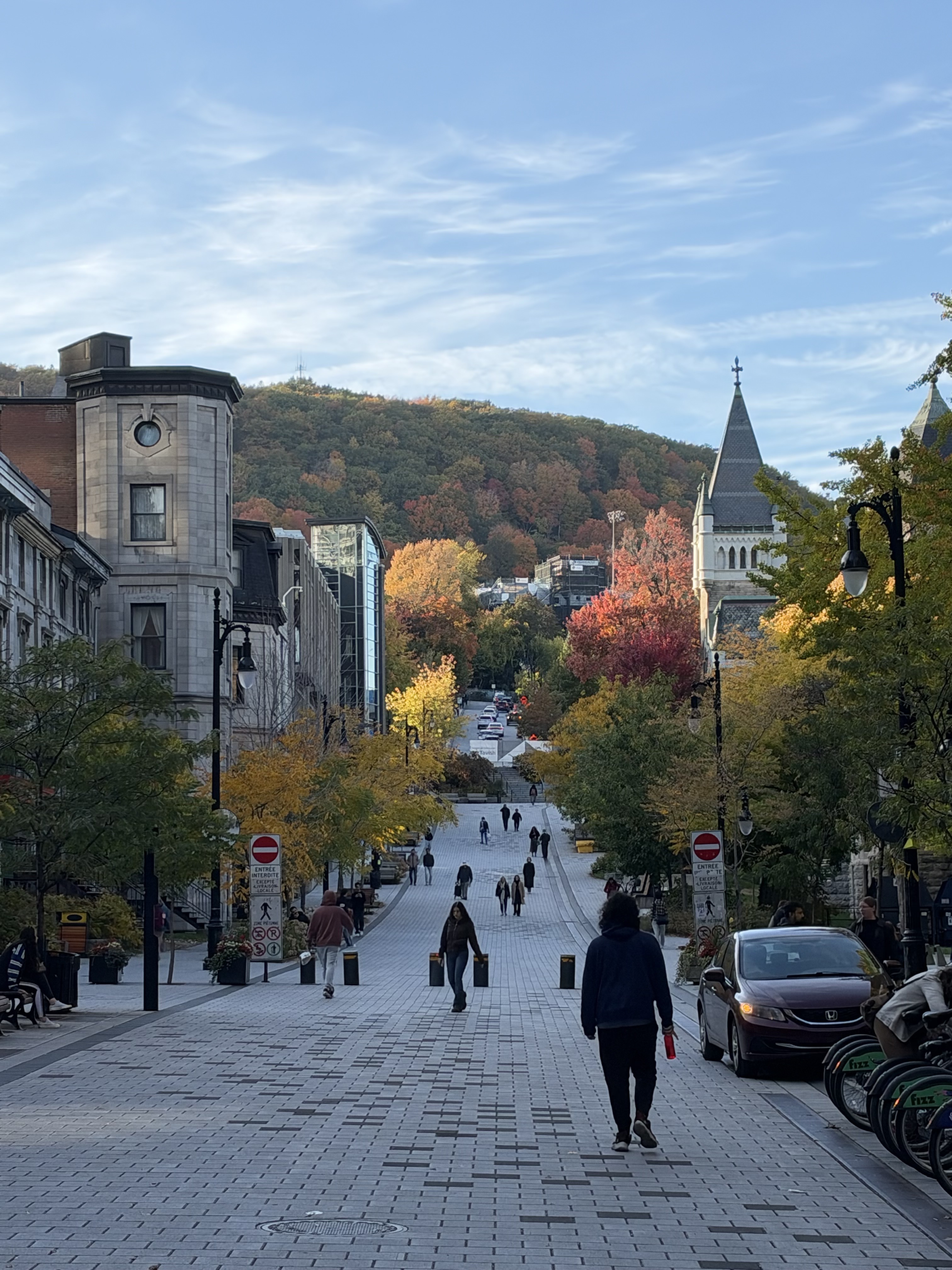
The people closest to me and the moments I notice through a camera keep me grounded. Family gives me a sense of home, while photography gives me a reason to slow down, pay attention, and preserve the details that might otherwise pass by.
Family
Through my lens
Contact
Whether it's about human–robot interaction, a potential research collaboration, or an interesting idea, I'd be happy to connect.